studio di Titolo
2023
Tesi di laurea
31 x 21 x 2 cm
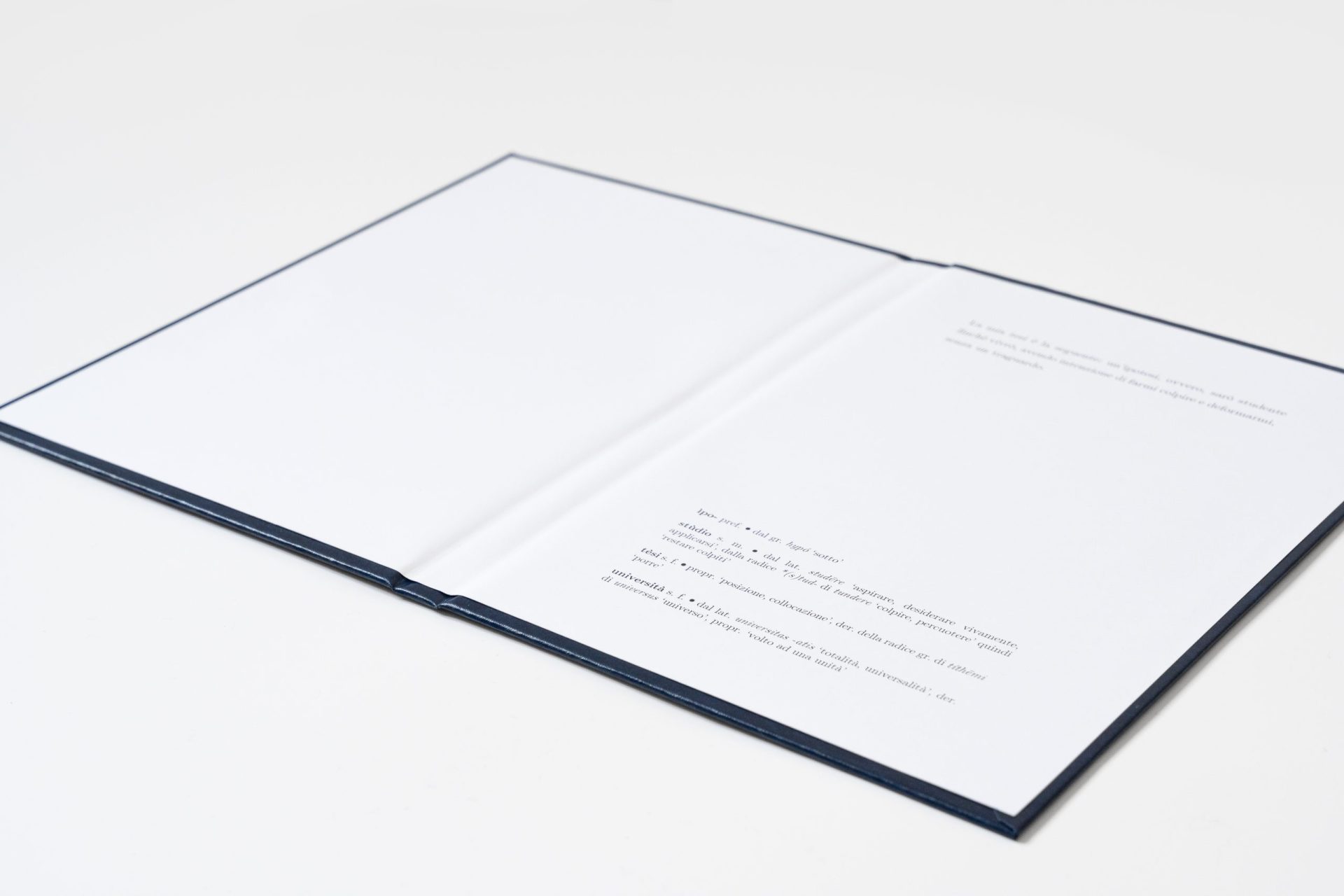
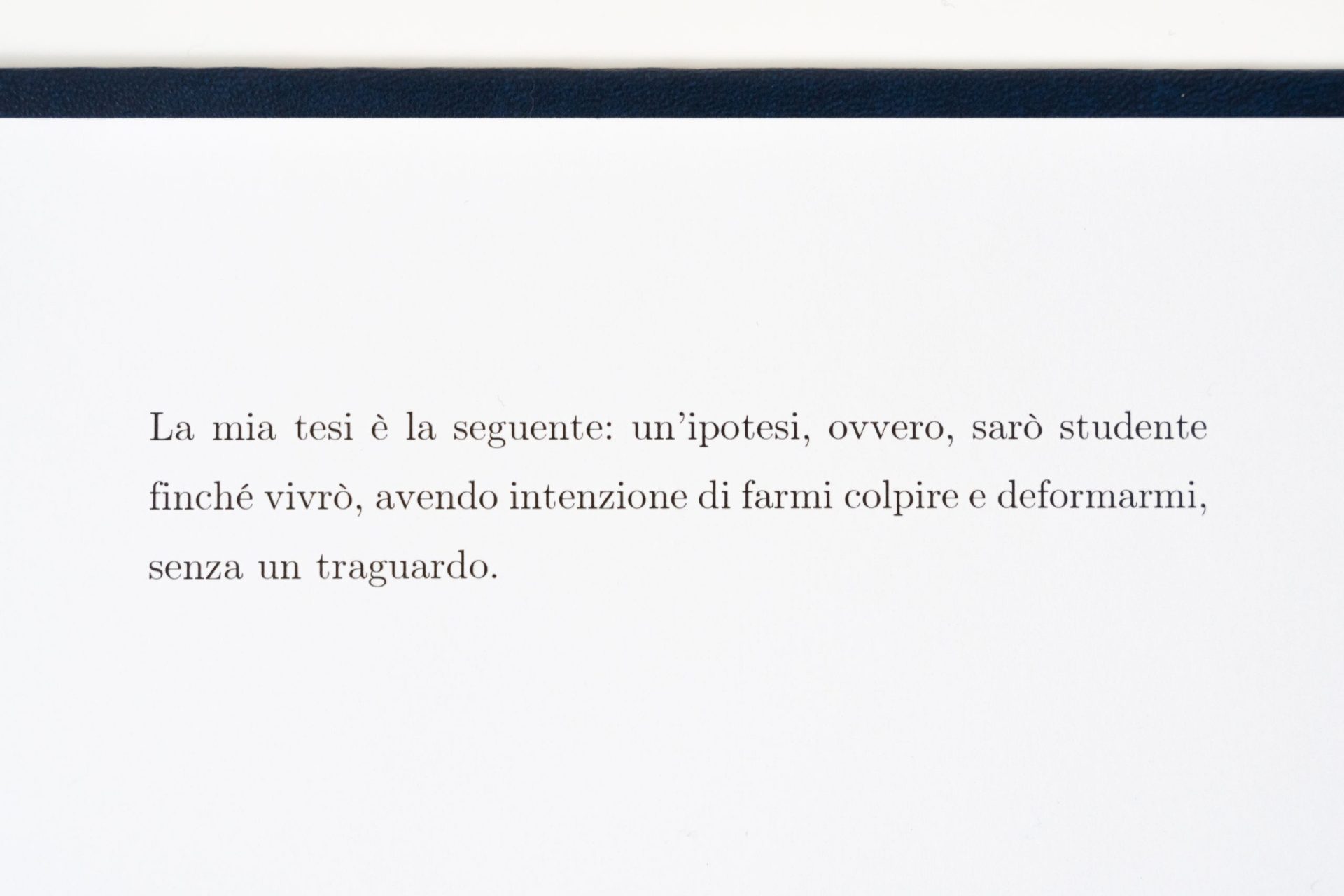
La mia tesi è la seguente: un’ipotesi, ovvero, sarò studente finché vivrò, avendo intenzione di farmi colpire e deformarmi, senza un traguardo.
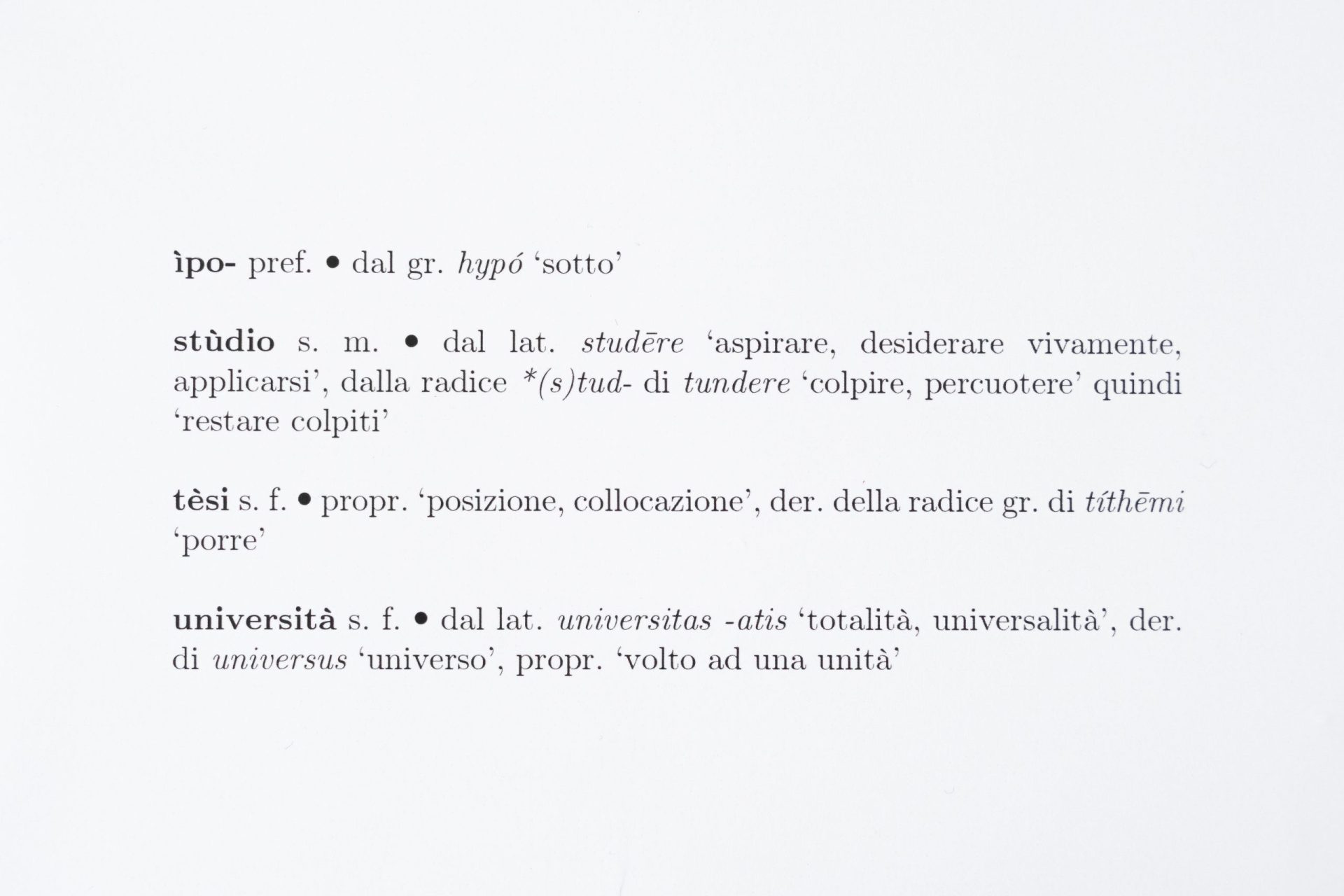
ìpo- pref. • dal gr. hypó ‘sotto’
stùdio s. m. • dal lat. studēre ‘aspirare, desiderare vivamente, applicarsi’, dalla radice *(s)tud- di tundere ‘colpire, percuotere’ quindi ‘restare colpiti’
tèsi s. f. • propr. ‘posizione, collocazione’, der. della radice gr. di títhēmi ‘porre’
università s. f. • dal lat. universitas -atis ‘totalità, universalità’, der. di universus ‘universo’, propr. ‘volto ad una unità’
“Che studi hai fatto?”
“Dove hai studiato?”
“Qual è la tua formazione?”
“Che Università hai frequentato?”
“Cos’hai studiato?”
“Hai studiato?”
“Cosa studi?”
“Che studi hai fatto?”
“Che formazione hai avuto?”
“Dove hai studiato?”
“Università?”
“Studi?”
“Che studi hai fatto?”
“Cos’hai studiato?”
…..
…
study of Title ¹
2023
Thesis
31 x 21 x 2 cm
My thesis is as follows: a hypothesis, that is, I will be a student for as long as I live, with the intention of being struck and reshaped, without a final goal.
ìpo- prefix • from the Greek hypó ‘under’
stùdy n. • from the Latin studēre ‘to aspire, to desire eagerly, to apply oneself’, from the root (s)tud- of tundere ‘to strike, to beat’ therefore, ‘to be struck’
thèsis n. • literally ‘position, placement’, from the Greek root of títhēmi ‘to place’
university n. • from the Latin universitas -atis ‘totality, universality’, from universus ‘universe’, literally ‘turned into one’
“What did you study?”
“Where did you study?”
“What’s your educational background?”
“What University did you attend?”
“What did you study?”
“Did you study?”
“What are you studying?”
“What have you studied?”
“What education did you have?”
“Where did you study?”
“University?”
“Studies?”
“What have you studied?”
“What did you study?”
…..
…
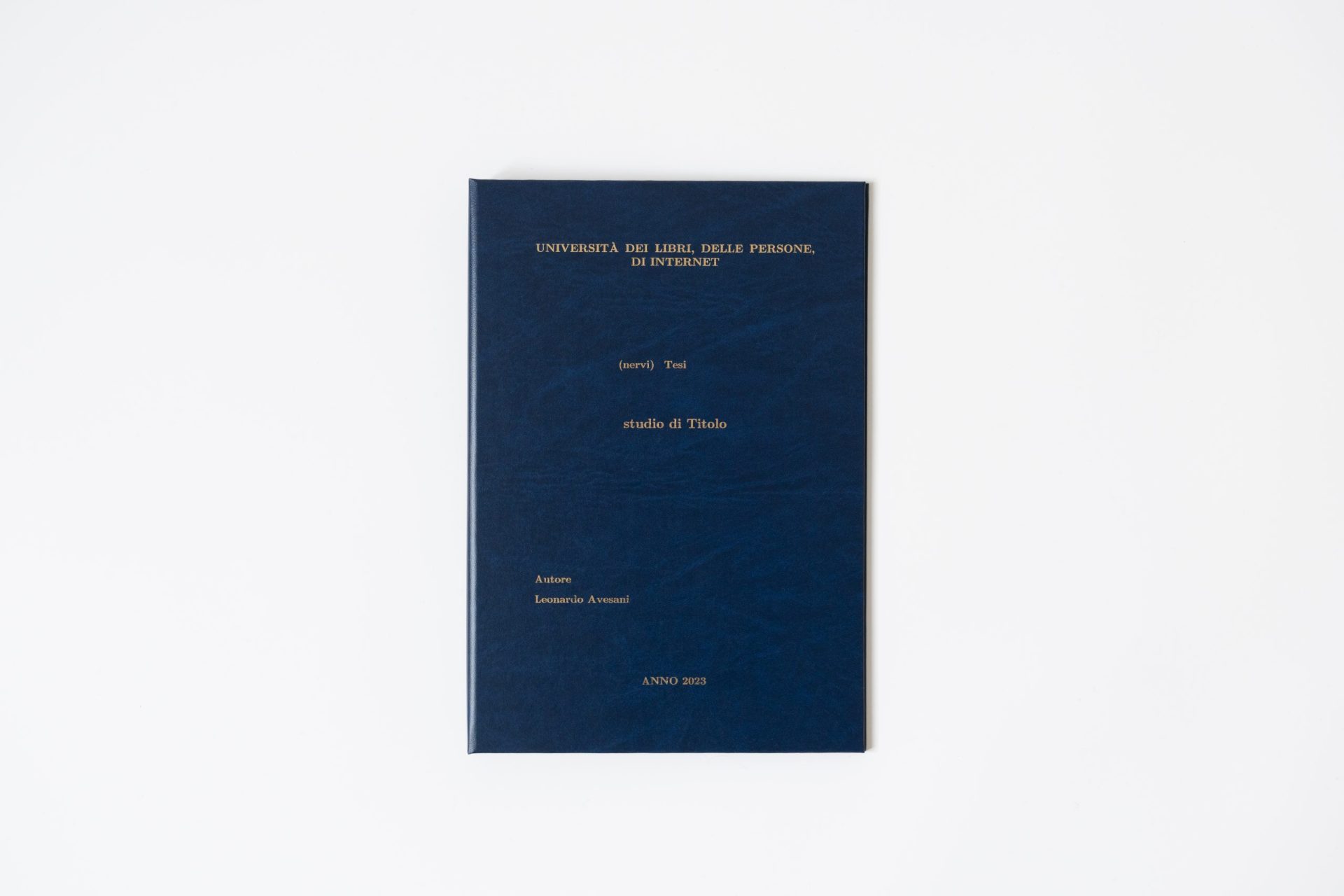
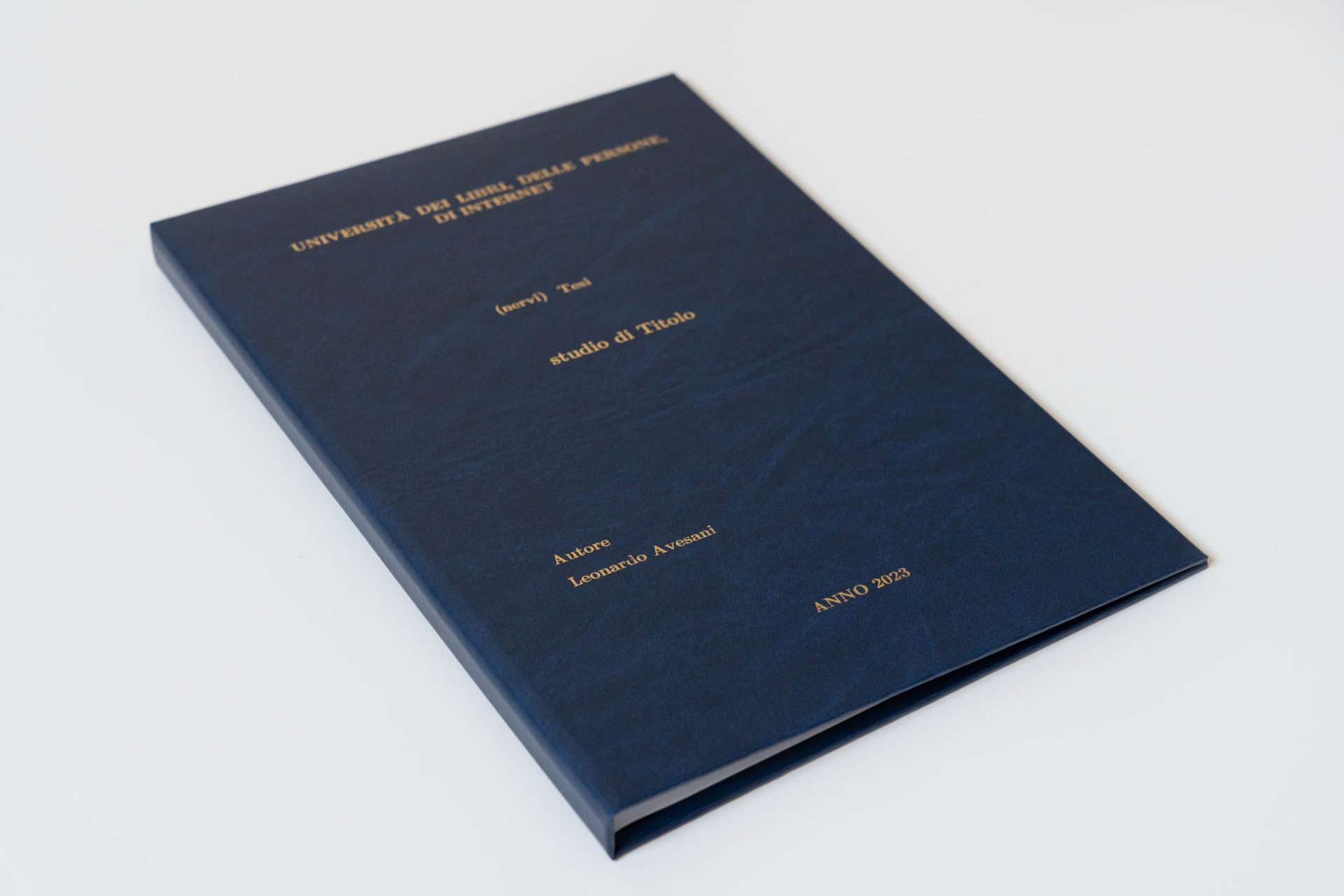
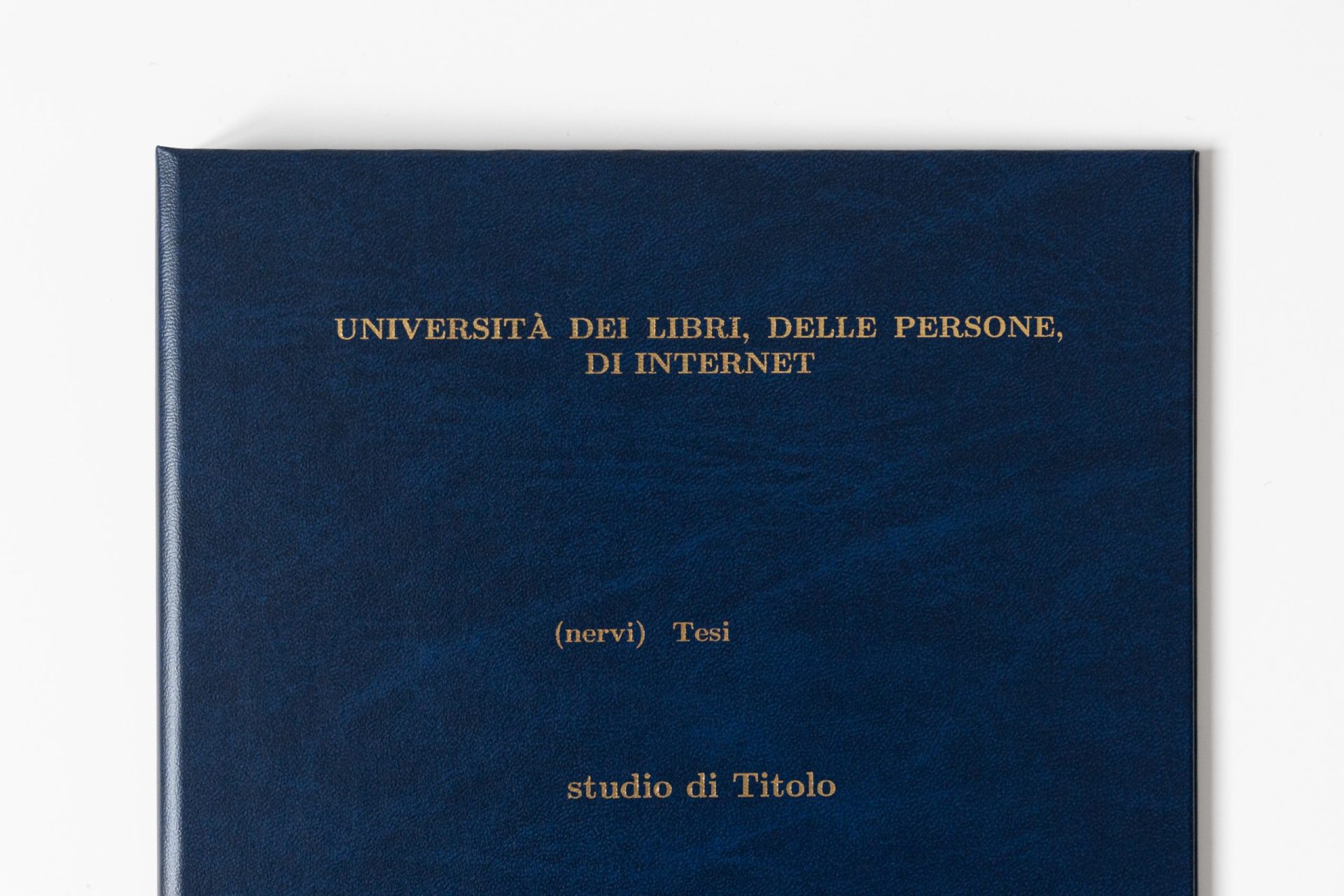
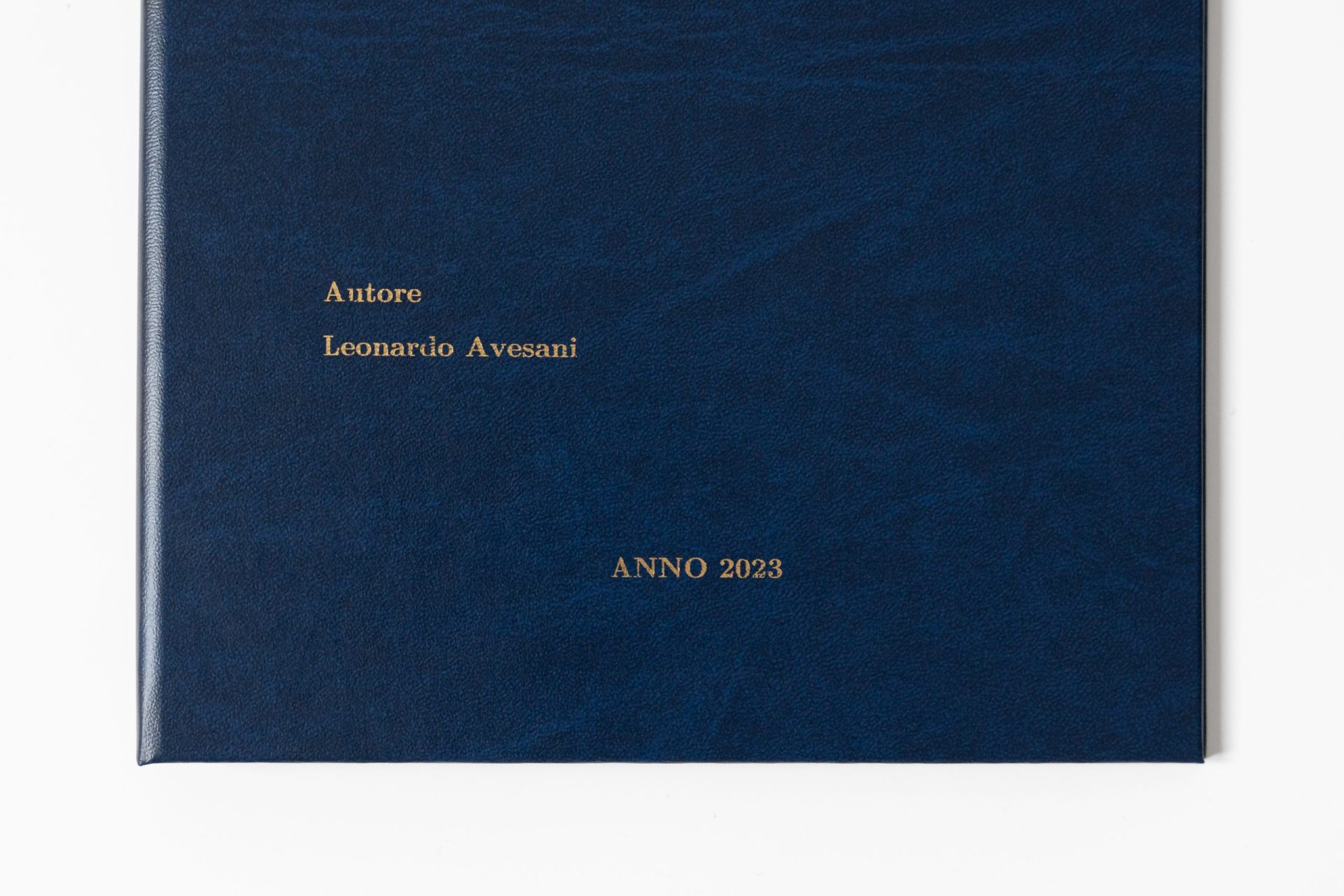
The artwork takes the form of a thesis, bound in the traditional Italian academic style.
On the cover, instead of citing an actual institution, it reads: Università dei Libri, delle Persone, di Internet ‘University of Books, People, and the Internet’.
The word Tesi, which in Italian means both ‘thesis’ and ‘tense’, is preceded by nervi ‘nerves’, forming the expression (nervi) Tesi, literally ‘tense nerves’, echoing phrases like ‘frayed nerves’ or ‘nervous tension’.
¹ By inverting the Italian expression Titolo di studio ‘Academic degree’, the work turns the title itself into a subject of study, highlighting how knowledge is never concluded, but always in motion.